

How Do You Know When Your Car Needs New Brakes?

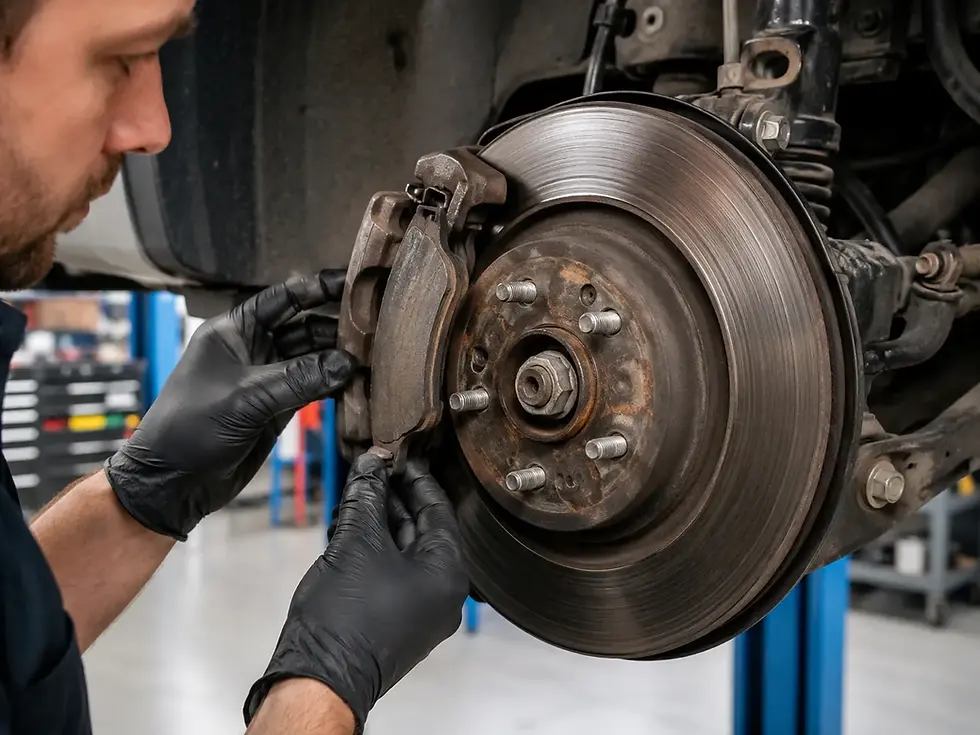
You likely need new brakes if you hear a high-pitched squeal or grinding noise when stopping, feel vibrations or pulsing through the brake pedal, notice a soft or spongy pedal, experience longer stopping distances, or feel your car pulling to one side while braking. Most brake pads last around 30,000 to 70,000 miles, but their lifespan varies based on your driving habits and conditions.
Here is exactly what to look and listen for.
8 Signs You Need New Brakes
1. A High-Pitched Squeal When You Brake
Most brake pads have a small metal tab built in. When the pad wears thin, that tab rubs the rotor and makes a sharp squeal. This is your car's built-in early warning system. It means it's time to get your pads checked soon, not tomorrow.
2. A Grinding or Growling Sound
If squealing turns into a heavy grinding noise, your pads are likely gone. Now metal is rubbing against metal. This can damage your rotors and cost you a lot more to fix. Stop driving on it and get it looked at right away.
3. Your Brake Pedal Feels Soft or Spongy
A firm pedal means a healthy brake system. A soft or sinking pedal often points to air in the brake lines or a fluid leak. Either way, your stopping power is not what it should be.
4. Vibration or Pulsing in the Pedal or Steering Wheel
Feel a shake or pulse when you brake? This usually means your rotors are warped from heat and wear. It's uncomfortable, and it's also a clear sign your brake system needs attention.
5. Your Car Pulls to One Side
If your vehicle drifts left or right every time you brake, one side of your brake system may be wearing unevenly or sticking. This can also point to a stuck caliper.
6. It Takes Longer to Stop
Notice your car rolling further than it used to before it fully stops? That delayed response is a major red flag. Worn pads and low brake fluid both reduce your stopping power.
7. A Burning Smell After Driving
A sharp, burning smell after a long drive or steep hill can mean your brakes are overheating. This sometimes happens if a caliper is stuck and the pad is dragging on the rotor the whole time.
8. The Brake Warning Light Turns On
Modern cars are built to tell you when something is wrong. If your dashboard brake light comes on, do not ignore it. It could mean low brake fluid, worn pads, or a bigger issue in the system.
How Often Should You Replace Brake Pads?
Most brake pads last between 30,000 and 70,000 miles. But mileage is just a guideline. Stop-and-go traffic on routes like Reisterstown Road or Painters Mill Road wears pads faster than open highway driving. Towing, hard braking habits, and hilly terrain also shorten brake life.
Instead of guessing by mileage alone, pay attention to the signs above and get your brakes inspected at every oil change or tire rotation.
What Happens If You Wait Too Long?
Driving on worn brakes does not just wear down your pads. It can damage your rotors, strain your calipers, and even affect your tires from extra hard braking. What starts as a simple brake pad replacement can turn into a much bigger repair bill if it's ignored for too long.
Worn brakes are also a real safety risk for you, your passengers, and everyone else on the road around Owings Mills, from Foundry Row to McDonogh Road.
If you noticed any of the warning signs above, don't wait for them to get worse. Book a brake inspection today and drive with confidence again.
Visible Signs to Check Yourself
You can do a quick visual check between service visits:
Look through your wheel spokes at the brake pad pressed against the rotor
If the pad looks thinner than a quarter inch, it likely needs replacing
Check for a puddle of brake fluid under your car after it's been parked
Look for a dark ring or blue discoloration on the rotor surface
If anything looks off, it's best to have a trained technician confirm what you're seeing rather than guess.
Why Choose Prestige Motors, LLC
Prestige Motors, LLC has spent more than 5 years helping drivers in and around Owings Mills stay safe on the road. Our team has earned more than 15 five-star reviews on Google from customers who trust us to diagnose brake problems correctly the first time and explain exactly what's going on with their vehicle, without the upsell pressure you sometimes get elsewhere.
Ready to get your brakes checked? Schedule your appointment online or give us a call at 443-660-8114.
Conclusion
Your brakes almost always give you a warning before they fail completely. Squealing, grinding, a soft pedal, or a car that pulls to one side are all signs worth paying attention to. Catching these issues early keeps you safer and keeps repair costs lower.
FAQs
Q: Can I still drive if my brakes are squeaking?
Yes, but get them inspected soon before the squeal turns into grinding.
Q: Is grinding always a sign I need new brakes?
Usually yes, it often means the pads are fully worn down.
Q: How much does brake pad replacement usually cost?
It typically runs between $250 and $500 per axle, depending on parts and labor.
Q: Do all four brakes wear out at the same time?
No, front brakes usually wear faster since they handle more stopping force.
Q: How do I know if it's my brakes or my rotors?
A vibrating pedal usually points to rotors, while noise and a soft pedal usually point to pads.


Comments